
 Earthwork jobs often account for over half of the total cost in road building projects. Many overlook how critical proper earthwork construction is to project success despite this major investment. Poorly executed earthwork excavation can lead to foundation failures, standing water, slope instability, and costly remediation later. We created this guide to help you understand what earthwork services involve and why they matter. Earthwork is the process of moving and altering soil and rock to prepare a site for construction. We’ll walk you through the earthwork definition, the step-by-step construction process, different types of services including grading and earthwork, and the equipment and professionals you’ll need for successful site preparation in this piece.
Earthwork Definition: What It Means in Construction
Moving and Shaping Earth Materials
Earthwork construction deals with engineering works created through the processing of parts of the earth’s surface with quantities of soil or unformed rock. Earthwork is the process of moving a section of the earth’s surface from one spot to another and into a new position at its core. This has establishing new places for earth materials such as sand while managing and altering the earth’s substance into a desirable shape and physical condition.
The process covers several operations. Workers loosen, remove and manage earth volumes during the building process. Excavation removes material from the site. Loading and transporting moves it to new locations. Filling spreads and compacts soil in designated areas. Typical earthwork projects are road construction, railway beds, causeways, dams, levees, canals and berms. Other common applications are land grading to adjust a site’s topography or to stabilize slopes.
Geotechnical engineers analyze and classify the soil’s characteristics, strengths and ideal uses. Civil engineers then use that data to design an earthwork plan. The plan has site grading, drainage and the required specifications for foundations. Heavy construction equipment handles these tasks due to the massive amounts of material to be moved, often up to millions of cubic meters.
Key Differences Between Earthwork and Excavation
Earthwork is a broader category that deals with altering the earth’s surface. Excavation pertains to creating voids underground. Earthwork often serves as the first step in preparing the site for excavation when it comes to underground construction.
Excavation focuses on digging trenches or holes for foundations. It removes soil and rock from a site to create an open face or hole for a building’s foundation or to install utilities beneath a roadway. Earthwork covers various activities in modifying or shaping the terrain. These are grading, backfilling and embankment construction.
Earthwork wants to prepare the site and make it conducive for excavation. Excavation is the process of removing material from the site to form the desired underground structure. Both activities require careful planning, soil testing, surveying and safety measures.
Why Site Preparation Matters
Site preparation will give a ground that is safe, stable and ready for building. Proper site preparation helps avoid big problems later, like unstable foundations or poor drainage. A site should be stable, cleared of debris, have proper drainage and be fully prepared for construction at the end of earthwork.
Unstable or weak subgrade and soil can lead to settling foundations, roads or settling utilities. Construction work will be of poor quality and will not meet required standards without proper site preparation.
The Earthwork Construction Process: From Start to Finish
While projects vary by location and intended use, earthwork construction follows common steps that need to take place.
Site Survey and Soil Assessment
Earthwork begins with extensive surveying and soil testing. This process identifies a site’s characteristics and has soil type, soil quality, drainage patterns, moisture, and what environmental concerns there might be. Areas where soil might need amendment or stabilization should be identified. This might have methods such as proof rolling, which tests the compaction quality of subgrade and base layers to identify soft spots or areas needing improvement.
Clearing and Stripping
Clearing is the removal of trees, brush, and debris, while grubbing removes stumps and roots. Trees or other objects staying on site should be marked. Surface soil has a high concentration of roots and other decaying materials. This makes it an unstable foundation for building. The topsoil is loosened, removed, and transported elsewhere for use.
Excavation and Earth Moving
Excavation removes soil and rock from a site. This creates an open face or hole for a building’s foundation or to install utilities beneath a roadway. Excavation also has topsoil stripping and digging trenches. The general contractor oversees site clearing, excavating, and removing soils not suitable for use.
Grading and Leveling
Grading shapes the ground to create a level base or desired slope. This step is especially important for proper drainage, erosion control, or creating flattened areas for parks, parking lots, or foundations.
Compaction and Stabilization
Compaction alters soil to increase its density or strength. This is essential for creating stable embankments, backfilling, or ensuring ground is strong enough to support a foundation. The process involves relocating and compacting good soils in layers known as lifts. Common additives, such as lime or soil cement, help make the soil more stable and less likely to settle. Contractors monitor soil and external conditions throughout this process and adjust tactics when needed based on moisture levels, temperature fluctuations, and unexpected variations in soil composition.
Types of Earthwork Services for Different Project Needs
Different earthwork services address specific construction requirements. These categories help you select the right approach for your project.
Excavation Services
Excavation services remove soil and rock from sites through specialized methods. Trench excavation creates narrow, deep cuts to install utilities such as pipes, cables, or conduits. Open excavations remove material to create foundations or basements. Borrow excavation brings materials from off-site locations when suitable material isn’t available. Rock excavation uses specialized equipment to break and remove solid rock. Muck excavation removes soft, wet, unstable soil.
Filling and Backfilling
Backfilling refills excavated areas with select materials to ensure structural integrity. Compacted fill becomes more rigid and uniform than most natural soils when placed properly. Coarse-grained soils like gravel and sand mixtures work best due to their ease of compaction.
Cutting and Grading
Cut and fill excavation involves cutting into higher elevations and using excavated material to fill lower areas. This technique levels ground and creates embankments. Mass grading reshapes terrain on large scales by removing high points and filling low areas.
Trenching for Utilities
Trench excavation is deeper than wide, not exceeding 15 feet in width. Dry utilities include electricity and fiber optic cables, while wet utilities include water and storm drains.
Site Drainage Installation
Drainage systems manage surface and subsurface water. Catch basins are set at strategic intervals where water collects naturally. Drainage ditches channel surface water away from active work zones.
Essential Equipment and Professionals for Earthwork Projects
Heavy Machinery Used in Earthwork
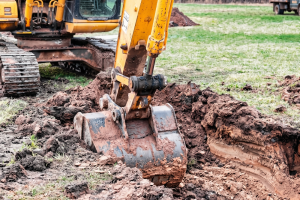
Successful earthwork construction relies on specialized heavy equipment matched to specific tasks. Excavators feature a long arm and bucket with 360-degree rotation. They are ideal for digging, trenching, demolition, and material handling. Bulldozers handle site clearing and rough grading with their powerful front blades. Motor graders refine surfaces to create the grades needed for road construction and drainage control. Compactors and rollers compress materials using static pressure or vibration once soil is moved and shaped. This increases density and prevents settling. Articulated dump trucks haul large volumes across rugged terrain.
Role of Earthwork Contractors
Earthwork contractors coordinate day-to-day operations and maintain crew coordination, equipment, and production. Qualified earthwork foremen need a minimum of two years’ experience in construction and two years supervising earthwork crews. Physical demands include knowing how to lift, move, and carry up to 50 pounds frequently. Site management remains significant. Contractors must ensure safe entrances, roads, and transportation frameworks throughout projects.
Geotechnical Engineers and Site Planning
Geotechnical firms provide vital site analysis with resources that include over six decades of historical data, more than 200 drill rigs, and 140 accredited laboratories. These engineers perform over two million individual field and laboratory tests annually. They review soil composition, groundwater levels, and geological factors to recommend appropriate foundation systems.
Modern Technology in Excavation Services
GPS-enabled software transforms jobsites into digitally mapped terrain. Intelligent machine control bulldozers read AutoCAD files and line up blade location and elevation on their own. Drone technology assists with site surveys, 3D geospatial mapping, and progress tracking. Building information modeling and CAD software create digital files that guide intelligent equipment.
Earthwork is the foundation of every successful construction project. We’ve shown you how this critical process moves from original site surveys through excavation, grading, and compaction to create stable and well-drained building sites. You protect your project from foundation failures and repairs that get pricey down the road by investing in qualified earthwork contractors and proper site preparation. Plan your earthwork carefully and you’ll set yourself up for construction success.
FAQs
Q1. What activities are included in site preparation? Site preparation involves documenting the existing site conditions, determining necessary work, protecting the site and surrounding properties, clearing vegetation and debris, excavating soil and rock, grading the land to proper elevations, and compacting the soil to create a stable foundation for construction.
Q2. Is excavation part of the site preparation process? Yes, excavation is a key component of site preparation. It involves removing soil and rock to create foundations, install utilities, or achieve desired elevations. Site preparation encompasses excavation along with other activities like clearing, grading, and compaction to fully ready a site for construction.
Q3. What is the difference between earthwork and excavation? Earthwork is a broader term that encompasses all activities involved in modifying the earth’s surface, including grading, backfilling, and embankment construction. Excavation specifically refers to the process of digging and removing material to create voids, trenches, or holes for foundations and utilities.
Q4. Why is proper site preparation important for construction projects? Proper site preparation ensures the ground is safe, stable, and ready for building. It helps prevent serious problems like unstable foundations, poor drainage, and soil settling. Without adequate preparation, construction quality suffers and may not meet required standards, potentially leading to expensive repairs later.
Q5. What role do geotechnical engineers play in earthwork projects? Geotechnical engineers analyze and classify soil characteristics, strengths, and ideal uses through field and laboratory testing. They evaluate soil composition, groundwater levels, and geological factors to recommend appropriate foundation systems and provide essential data that civil engineers use to design earthwork plans.
We Provide Earthwork Excavating Services & More
We handle everything from creating precise foundation excavations and utility trenching to implementing strategic grading that directs water away from your structures, preventing pooling and potential damage. Our earthwork services to leverage GPS-guided machinery and 3D modeling software, which enhance precision and efficiency while minimizing errors and optimizing your project timeline.
> Learn More
Contact Us (859-393-1027) For a Consultation
—
About Webb’s Excavating
At Webb’s Excavating, we provide dependable excavation services for residential, commercial, and site development projects throughout Northern Kentucky and Cincinnati. From site preparation, grading, trenching, and drainage solutions to land clearing and utility excavation, our experienced team delivers safe, efficient, and precision-driven work that keeps your project on schedule. Whether you’re breaking ground on new construction or improving an existing property, we’re the trusted partner to get the job done right the first time.
> Learn More